

Rising trade, climate, nature and new fuel issues as well as new defence imperatives are reshaping Australia’s ports. Why integrated strategy and digital innovation will define the next era – if the sector moves fast enough
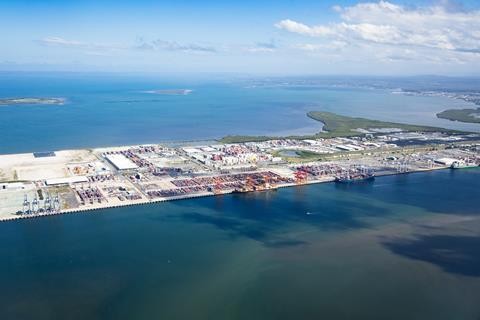
The Port of Brisbane is currently embarking on a major 25-year Channel Enhancement Project. BMT is the lead for the Environmental Impact Statement and associated studies for the project
Australia’s port sector, anchoring more than AUD$650 billion in annual trade and vital employment, now stands at a pivotal crossroads. Surging container and bulk exports, escalating investment in defence, rapid technological advances and new mandates for climate and nature stewardship are converging to rewrite the playbook for sustainable port development. The real question isn’t if Australian ports can meet the future’s evolving demands – but how quickly, smartly and collaboratively they can adapt?
Alongside these trends, the sector faces the emerging challenge of alternative fuels for shipping, with ports increasingly called upon to provide future-ready refuelling infrastructure. Meeting these requirements comes with significant investment demands – not only in technology and operational capacity, but also in new partnerships and funding models tailored to green maritime solutions.
THE BIG PICTURE
Growth and Government Ambition
Trade volumes keep breaking records. In FY25, the Port of Melbourne alone handled AUD$154 billion in trade and 3.39 million TEU – a new national high – while Western Australia’s Pilbara Ports delivered nearly AUD$153 billion in bulk exports, underpinning the country’s economic resilience. The Australian Government’s AUD$8 billion investment in new naval and shipbuilding precincts – part of an unprecedented surge in defence spending – will accelerate demand for future-ready, resilient port infrastructure. Private and resources sector investment is powering new renewable energy and transshipment facilities, while digital transformation is fast becoming table stakes in asset management and trade enablement.
Karim Ghaly
Karim is BMT‘s Dredging Advisory Lead with more than 20 years of experience overseeing the design and delivery of large-scale ports, maritime and dredging projects across Australia and internationally.
Karim Ghaly observes: “Rising trade volumes, the rapid expansion of renewable energy, the growth of transshipment operations and evolving defence priorities are placing unprecedented demands on Australia’s maritime infrastructure. The question is no longer whether Australian ports can meet future requirements, but how quickly and sustainably they can adapt? Success will depend on how effectively the sector can plan, design and invest in infrastructure that is adaptive, digitally enabled, environmentally responsible, climate-resilient, and operationally efficient. As a global leader in maritime engineering, environmental science and digital innovation, BMT is uniquely positioned to guide this transformation and build on decades of partnership with Australia’s ports and government agencies.”
COMPLIANCE AND OPPORTUNITY
ESG and Defence as Change Drivers
Recent federal reforms have shifted mandatory climate-related financial disclosures, including TCFD and IFRS S2, to the heart of boardroom agendas. Universities, government and industry are aligned: scenario planning, climate risk management and nature financial disclosure (TFND) are now non-negotiable. Leading ports – Brisbane, Melbourne, Westport, Newcastle – are setting benchmarks with decarbonisation plans, habitat restoration and digital reporting strategies. These are now first-order priorities for government too, as defence precincts and allied naval operations rely on ports that can demonstrate resilience and transparent governance.
Crucially, ports must plan for the transition to alternative fuels, such as hydrogen and ammonia, by developing the complex infrastructure these future fuels require. This is rapidly becoming a first-order priority for port operators and government, given the scale of investment and interdependency with national sustainability targets.
SMARTER, GREENER, MORE RESILIANT
The Next Port Paradigm
Here, as in the energy and resources sector, integrated infrastructure planning – spanning digital twins, simulation and ecological stewardship – is now central to board-level decisions. Recent government announcements have confirmed that progressing shipyard, sustainment and marine security capabilities will be critical to Australia’s delivery of the AUKUS pathway, ensuring the nation is equipped to meet strategic requirements through the early 2030s.
Karim Ghaly adds: “Expanding trade volumes and the arrival of larger vessels are increasing demand for deeper channels and upgraded berths. At the same time, national defence priorities are driving major spending in new and upgraded naval infrastructure to support fleet expansion and maritime security.
Growth plans for renewable energy projects including offshore wind and hydrogen hubs are transforming coastal and port land use. Private and resources sector investment is stimulating the growth of transshipment and associated logistics infrastructure. Meanwhile, technological advancements are facilitating digital transformation of ports to optimise asset management, enhance safety and improve cost efficiency. Overlaying all of this are heightened community and regulatory expectations for environmental adaptation, carbon reduction and social responsibility that continue to shape all planning, design and delivery activities.”
DIGITAL TRANSFORMATION
Global best practice – and local examples – show that digital transformation isn’t an option; it’s foundational. Digital twins and real-time data integration, as pioneered at leading Australian ports, are proving their worth in improved safety, operational insight, and environmental stewardship. AI-enabled simulation, predictive analytics and cloud platforms now guide capital investment, asset renewal and proactive management of risks and bottlenecks.
Ghaly’s perspective: “BMT is integrating its expertise across metocean modelling, ship motion analysis port logistics, and materials handling to simulate the full spectrum of transshipment operations. Using proprietary discrete-event simulation tools, BMT models complex logistics chains to test and refine operational scenarios before implementation. This approach identifies potential bottlenecks, optimises equipment selection and capacity, and accurately predicts throughput while accounting for both planned and unplanned downtime. Together, these insights form a critical foundation for informed transshipment investment decisions, helping customers reduce uncertainty and de-risk capital planning.”
Building on this analytical foundation, real-time digital platforms are re-writing the future for port operations. As Ghaly notes, “Digital transformation is redefining how ports operate, maintain and expand their assets. Real-time data integration, digital twins, predictive analytics and AI-enhanced decision support are rapidly moving from ‘good-to-have’ to the core of modern port management. BMT’s ADAPT cloud-based system stores, visualises and analyses vast port-related datasets. By integrating these data streams, ADAPT enables port operators to monitor environmental conditions in real time and optimise asset management through predictive modelling and AI algorithms. BMT’s simulation and digital platforms provide a powerful decision-support ecosystem, enhancing predictability, safety, and cost efficiency while helping ports accelerate their digital transformation journey.”
COMPLIANCE ADVANTAGE
Australia’s ports are uniquely placed to turn compliance into advantage. Nature-related financial disclosures prompt restoration of natural habitats, opening doors to green finance and new partnerships, while climate-related assessments support proactive adaptation, staged infrastructure upgrades and improved trust with stakeholders. The sector’s most forward-looking operators see these requirements not as burdens, but as catalysts for innovation and new commercial value.
A key example: Port of Brisbane’s advanced asset monitoring delivers both real-time operational data and positive community impact. Similarly, in the bulk sector, Pilbara’s record export figures and throughput depend on technology-enabled logistics, resilience planning and alignment with public sustainability goals.
LOOKING AHEAD
Seizing the Opportunity
The ability to stay relevant and resilient hinges on continued investment in digital tools, ESG governance and multi-stakeholder partnerships. The ports that integrate technological innovation and scenario planning with robust, board-led risk management will stand ready for what’s next. Compliance, when seen as a springboard for strategic adaptation, can fuel operational excellence, growth and ecological stewardship alike.
Further, as investment in alternative fuel infrastructure grows, ports will play a wholly decisive role in shaping the entire supply chain for low-carbon shipping. Addressing these infrastructure demands in partnership with industry and government will be essential for delivering lasting resilience and value.
Dr David Rissik
David is BMT’s APAC Lead in Risk and Resilience. He has over 30 years’ experience working in marine and coastal systems and in climate change risk assessment and adaptation planning, with a portfolio of work in Australian Ports.
As Dr David Rissik concludes: “Having worked alongside port boards, operators and stakeholders for many years, I’ve witnessed the transformative impact of integrated governance, evidence-based decision-making and ecological leadership. As the sector navigates new disclosure mandates, rising expectations and unprecedented climate risks, those willing to invest in robust standards and practical, recurring assessment – combining data, people and partnerships – will shape the legacy of Australia’s maritime gateways for generations to come. This journey is not just about ticking compliance boxes, but about redefining what it means to be a trusted bridge between economic progress and thriving coastal communities.”
Australia’s ports can and must set new global standards for climate and nature resilience, forging ahead as partners in growth, security, sustainability and enduring value creation.


